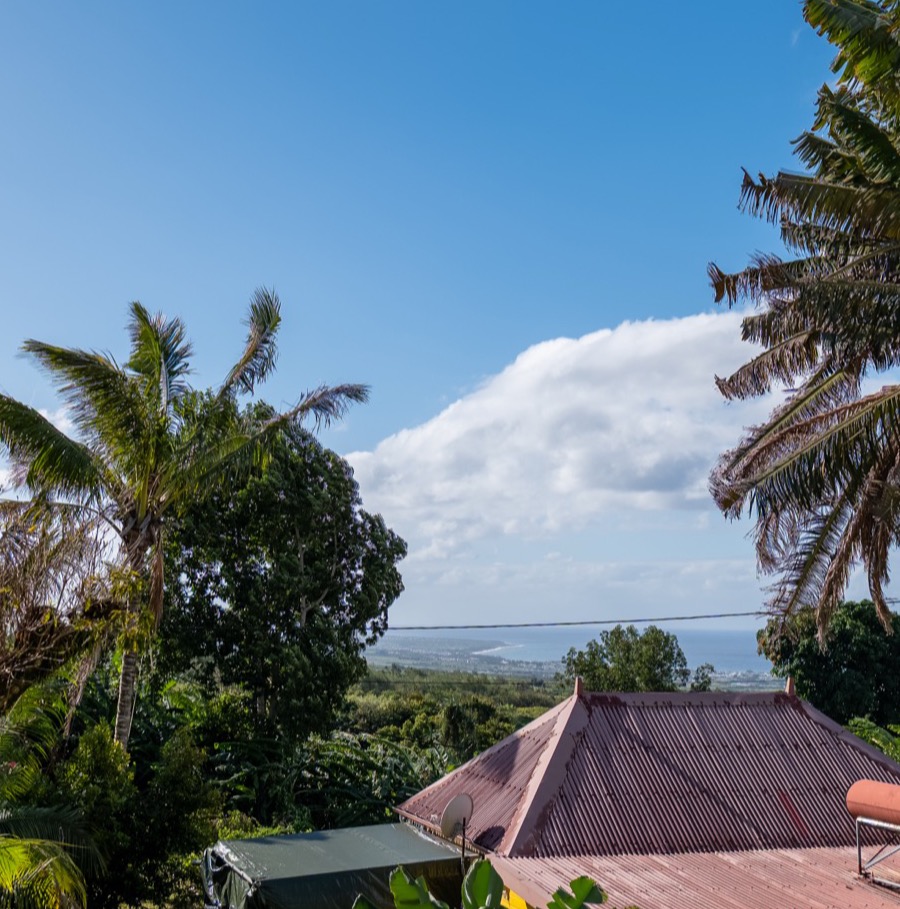
Bassin La Paix, then the windward coast
The essentials
- From the bungalow
- 15 minutes to Bassin La Paix
- Commune
- Bras-Panon, on the Rivière des Roches
- Access
- car park, then a few minutes on foot
- Swimming
- regulated — check the order in force
- The whole day
- three stops, under 30 minutes between each
- Best time
- morning, when light reaches into the gorge
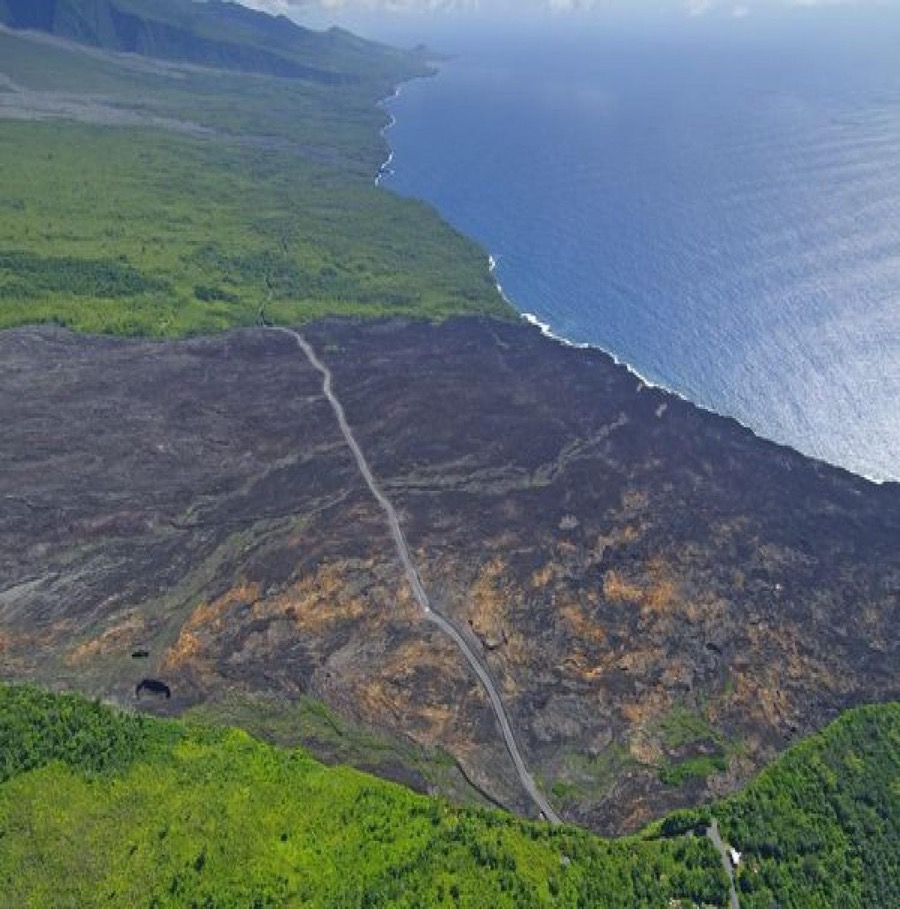
The east of Réunion has no picture-postcard beach, and it is worth saying straight away: the sea is strong, the sand black, swimming rarely possible. That is exactly why the windward coast stayed itself while the west was built up. Here you do not swim in a lagoon — you swim in rivers.
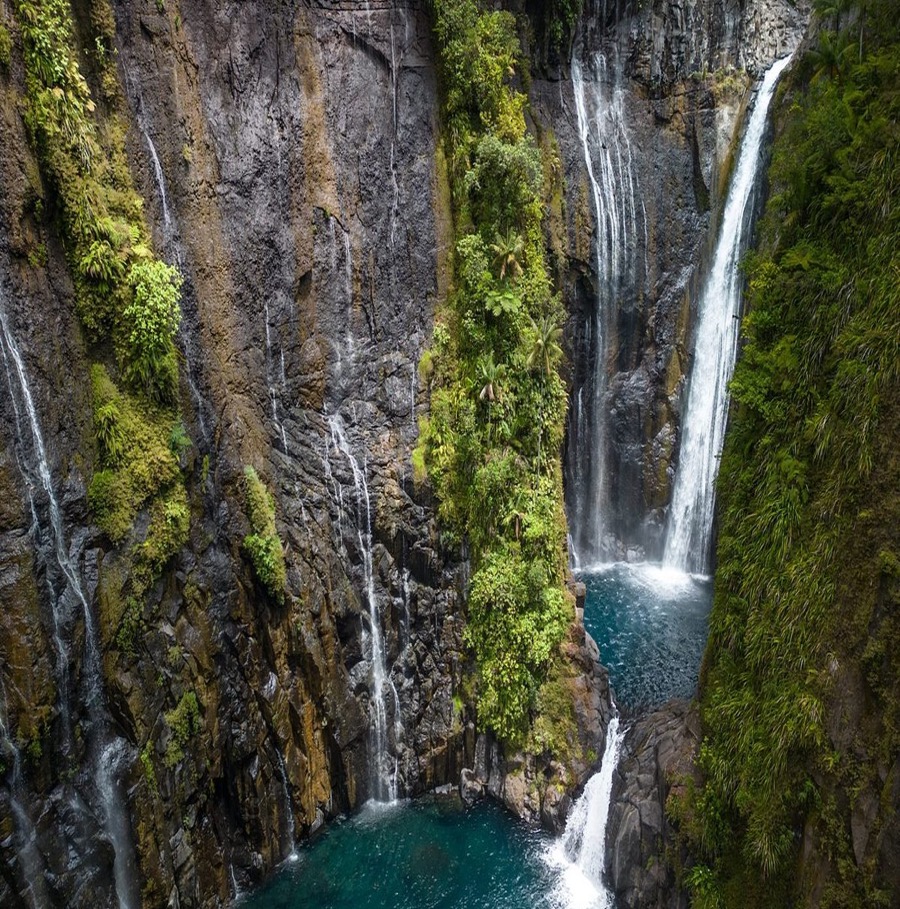
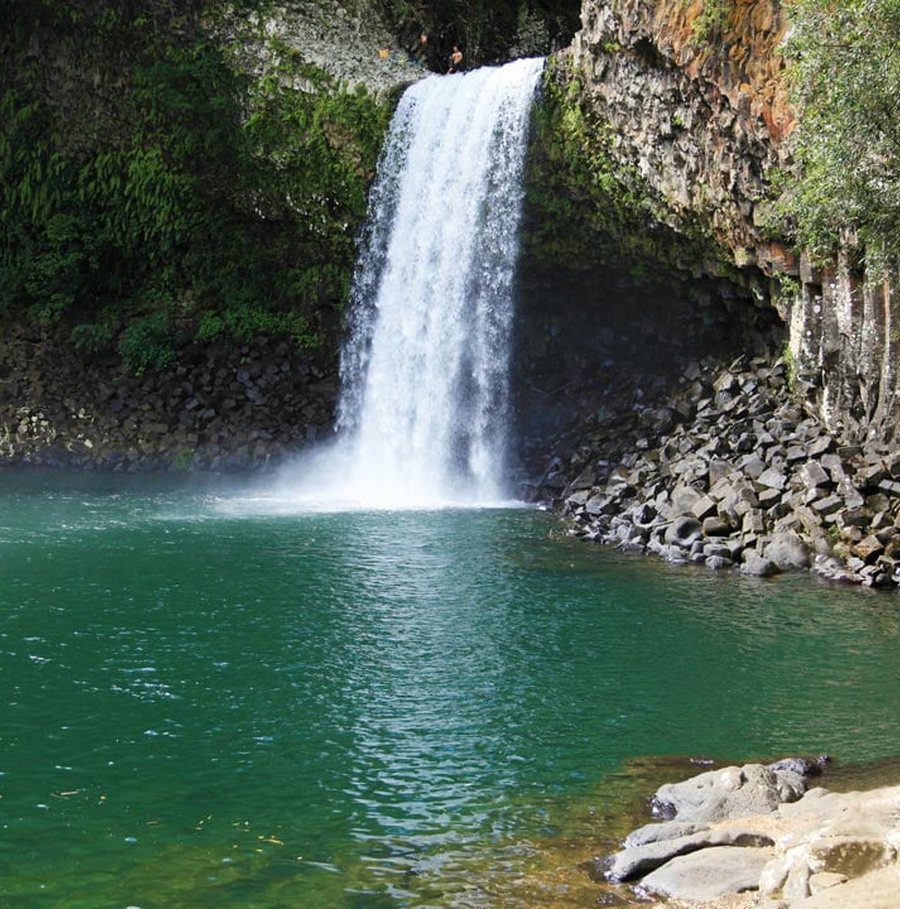
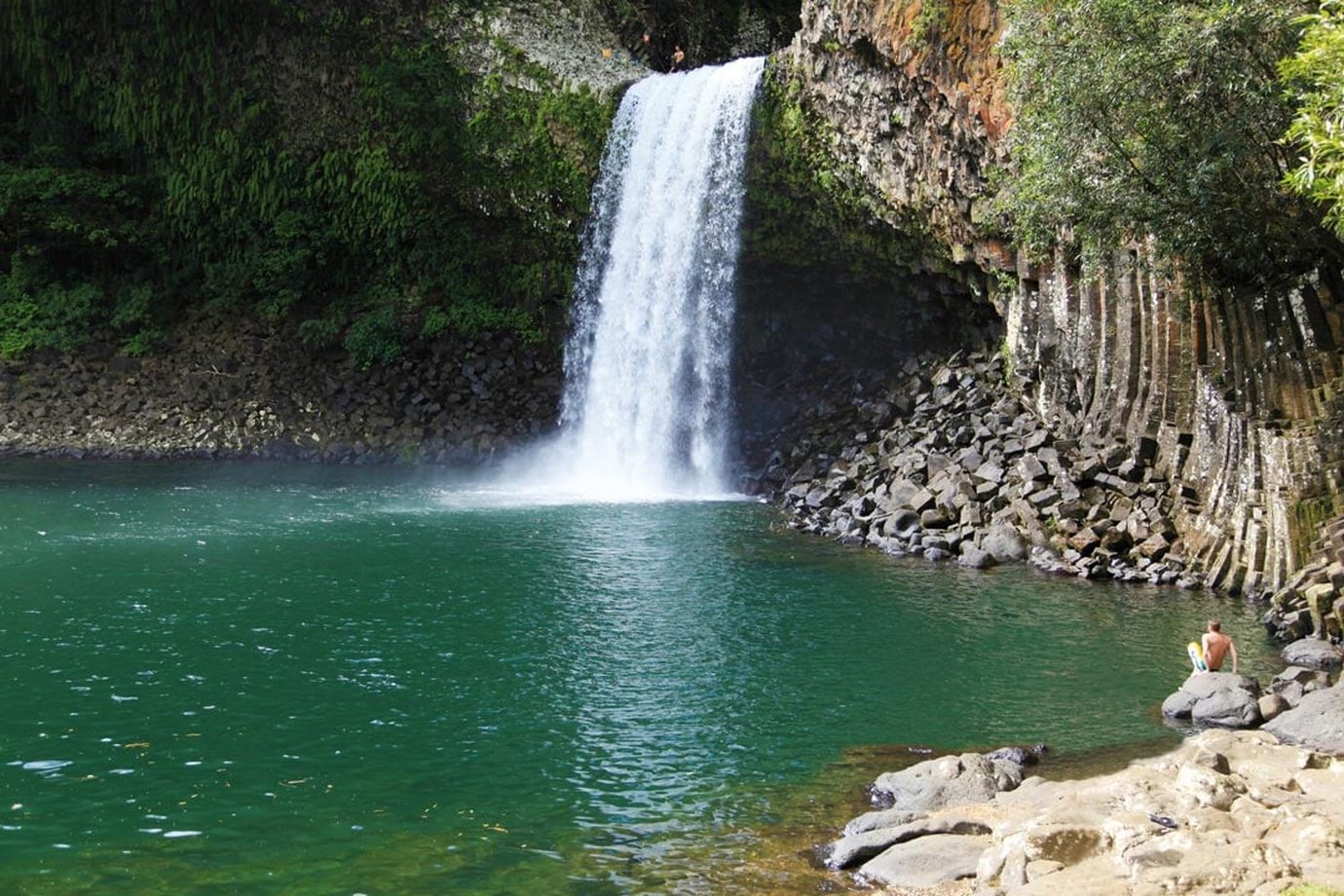
Bassin La Paix is the most accessible of them all. A wide waterfall dropping into a dark pool, framed by basalt organ pipes — the regular columns lava forms as it cools slowly. All of it a quarter of an hour from the bungalow, at the end of a cane road.
Bassin La Paix, and Bassin La Mer above it
A road runs down to a proper car park at Bras-Panon; from there, a few minutes on foot and a flight of steps lead to the pool. It is short, it is waymarked, and it works with children. In return, the place is well known: come early, or on a weekday.
One important point, and it changes from year to year: swimming has been banned by municipal order after rockfalls from the walls. The situation evolves. Check with the Bras-Panon town hall before you get in the water, and respect the signs on site — they are what counts, not what you read online.
Further up the Rivière des Roches, Bassin La Mer takes a longer walk, around three quarters of an hour on a rougher path. It is wilder and far less busy. Same caution, and the same rule: you do not enter a river when it has rained upstream, even if the sky above your head is clear.
Sainte-Anne, eight minutes further
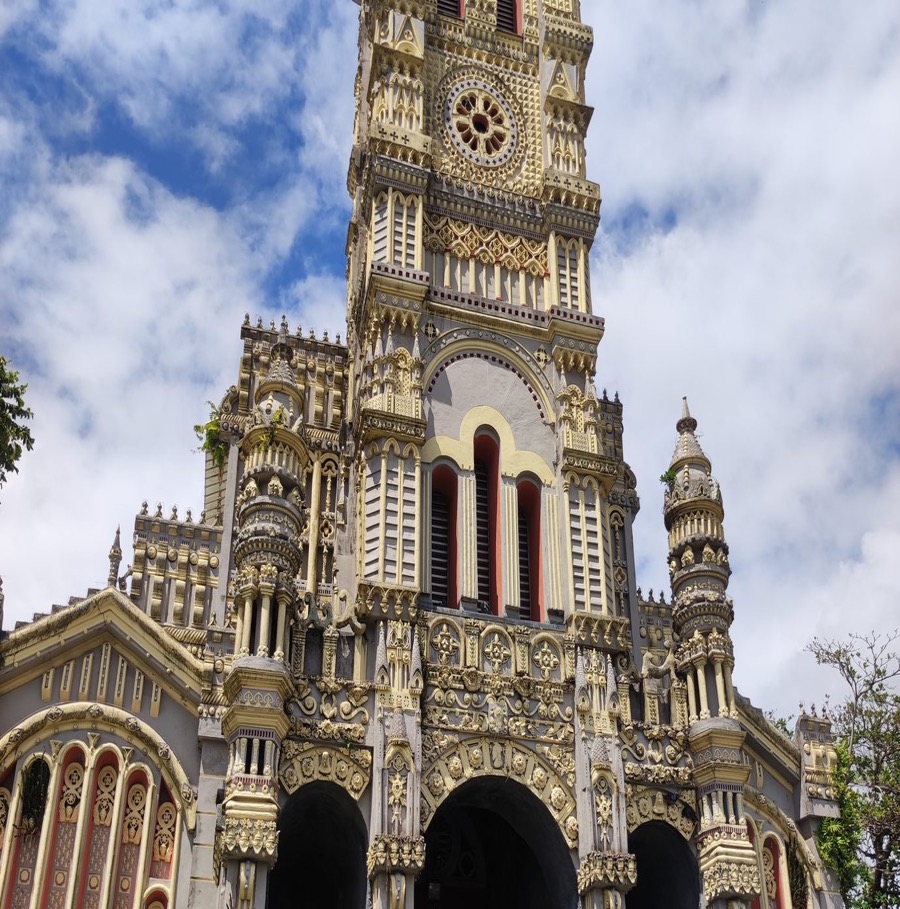
On the way back down to the sea, the church at Sainte-Anne is worth the stop even if churches do not interest you. Its façade is covered in a profusion of carved motifs — fruit, flowers, cherubs — with no equivalent on the island. It is a listed monument, and it is eight minutes from the bungalow.
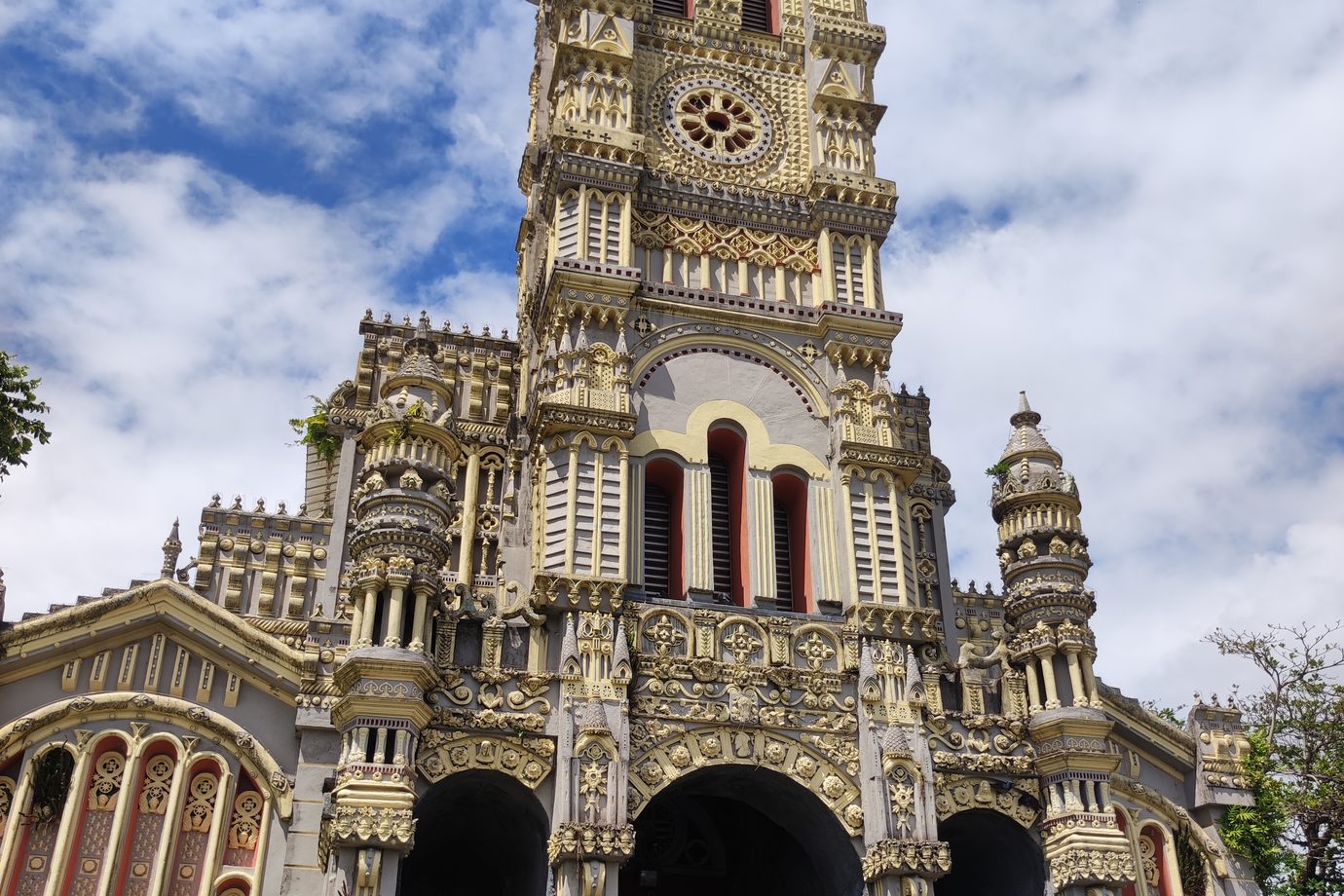
Right beside it, the mouth of the Rivière des Roches gives a fair idea of what this coast is: fresh water meeting a sea that never quite settles. You look at it; you do not swim in it.
Anse des Cascades to finish
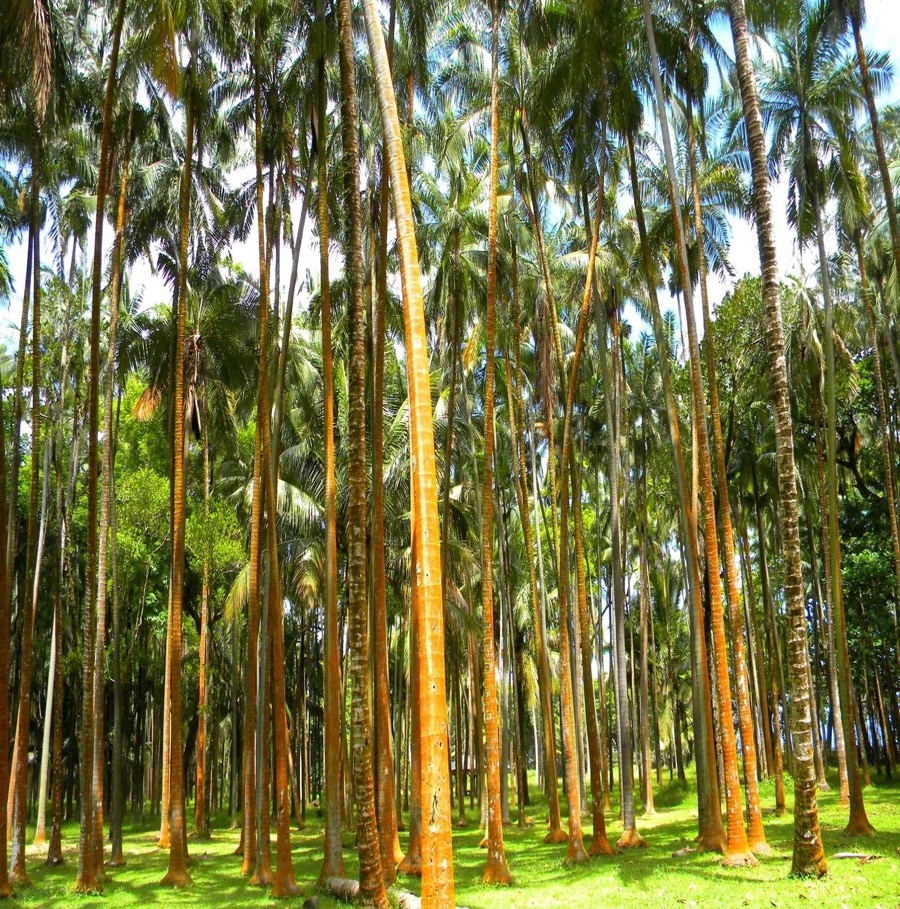
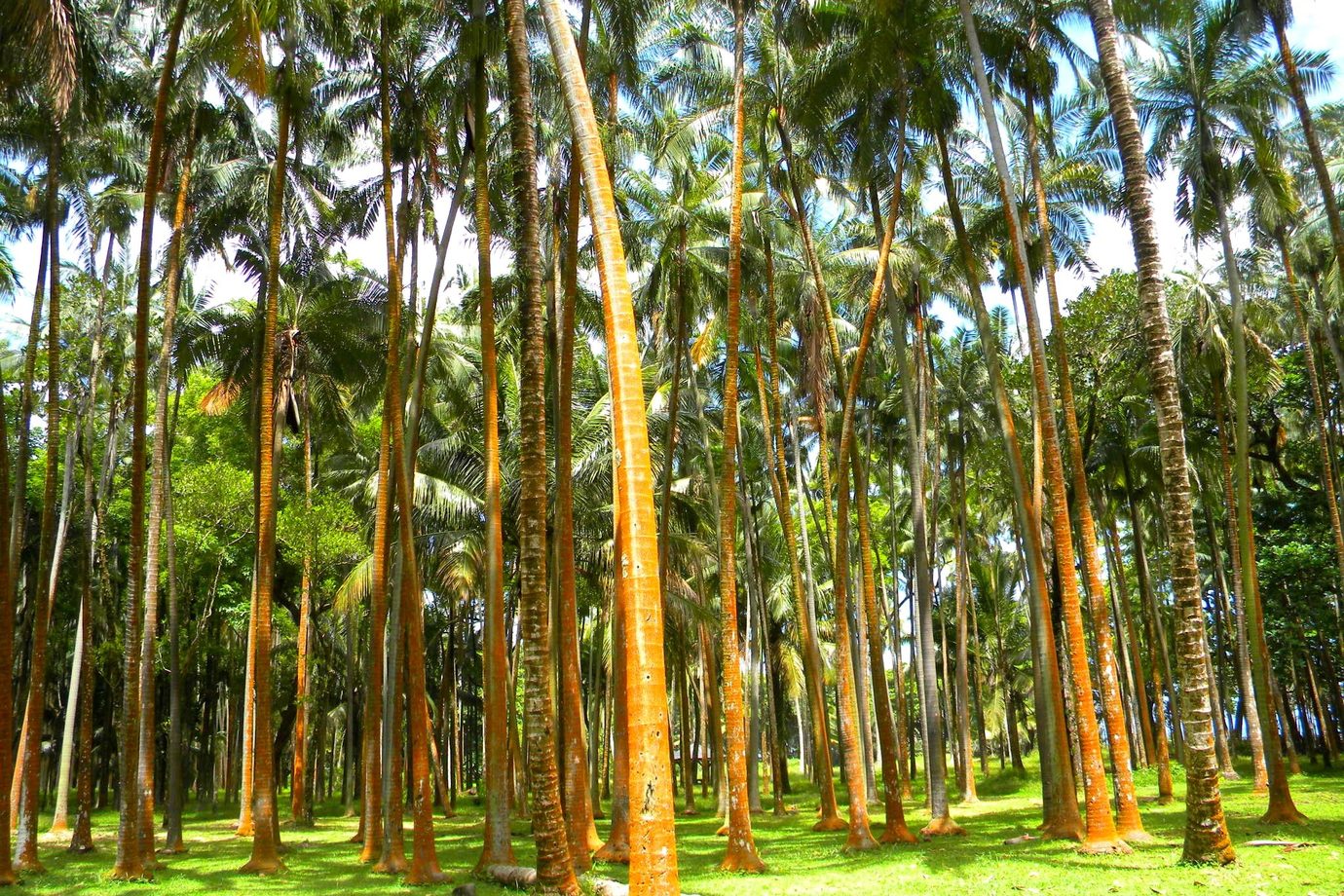
Half an hour south, the Anse des Cascades earns its name: several waterfalls drop straight into the sea, under a planted palm grove that gives dense, even shade. It is the point in the day where you sit down and stop doing anything. There are tables, barbecues, and a great many people on Sundays — come another day.
What to bring
- Shoes that grip on wet rock. Polished basalt is slippery, and it is the first cause of falls on these sites.
- A towel and a change of clothes, if swimming is allowed on the day you are there.
- Something to picnic with: the Anse des Cascades is made for it, the pools much less so.
- A windproof layer. On the windward coast, a ten-minute shower gives no warning.
Why this day rather than another
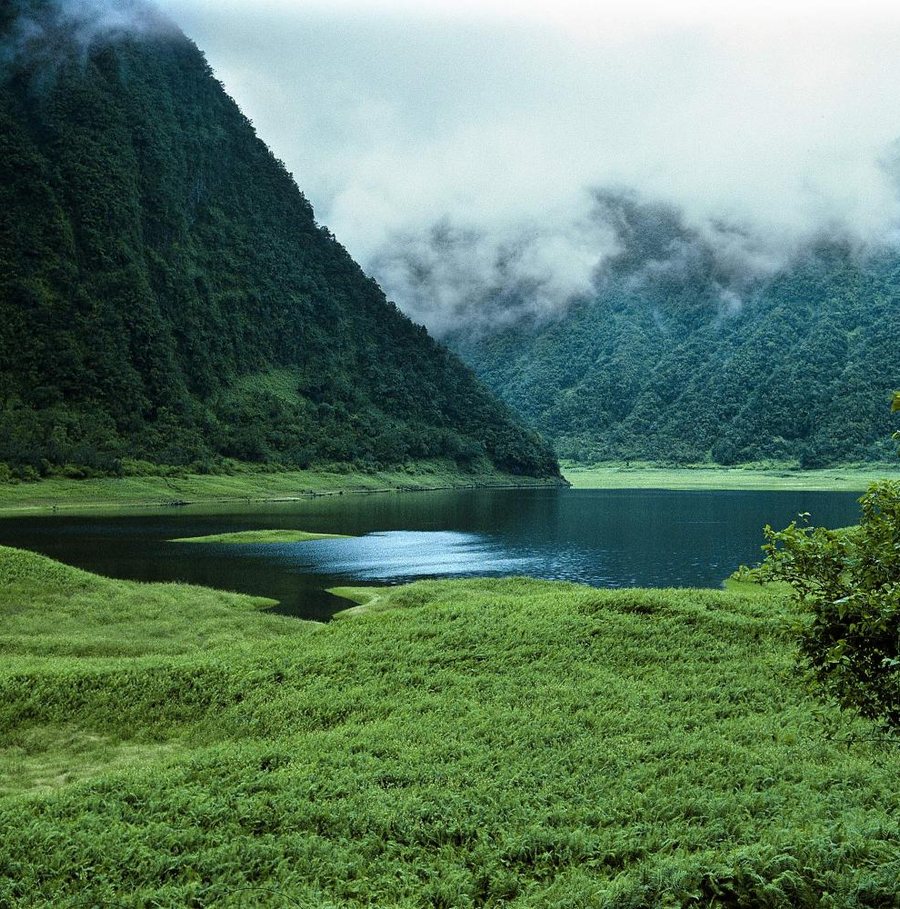
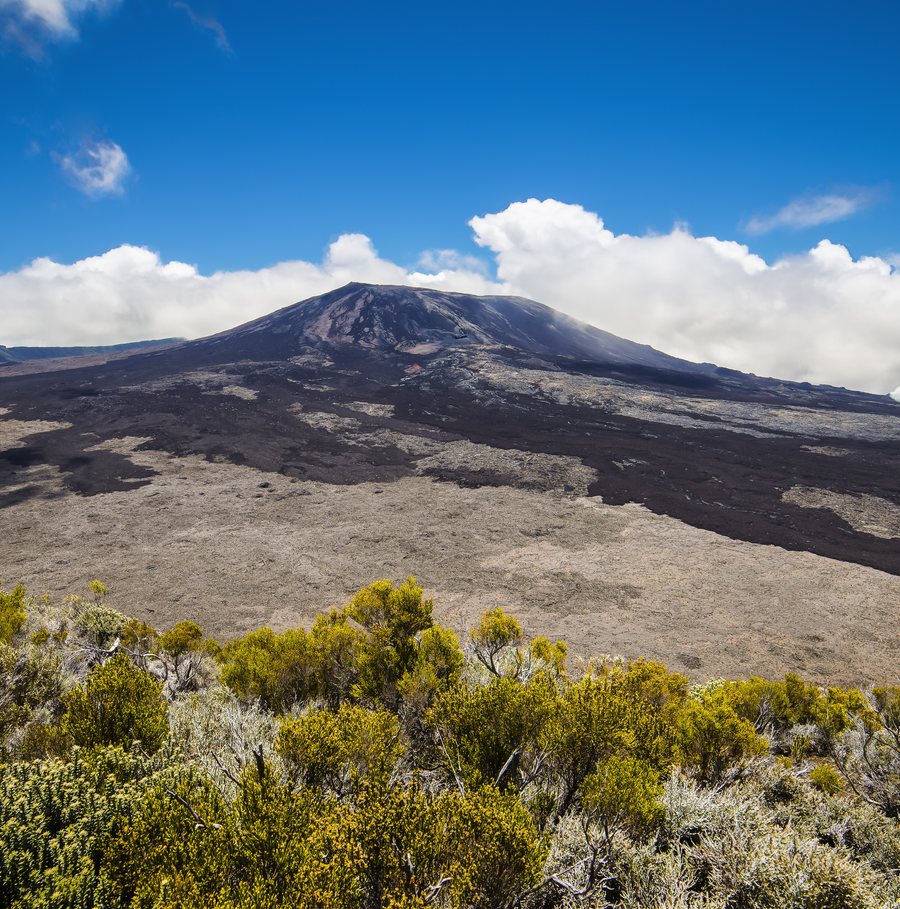
Because it fits inside a thirty-minute radius. You leave after coffee, come back when you like, and you have not spent the day in the car. That is the principle behind everything we suggest here: the east is visited from the east. For a more committing day, Grand Étang is twenty minutes away; for the big outing of the stay, the volcano means leaving at four in the morning.
When to come
The pools are at their best in the wet season, January to March, when the flow is strong — but that is also when swimming bans are most often in force, and when rain upstream can raise the river in minutes. From May to October the flow drops, the water warms a little and the risk falls. In any case, one rule beats any forecast: if the water is cloudy or carrying branches, you do not get in, however blue the sky.
Frequently asked questions
Can you swim at Bassin La Paix?
Swimming there is regulated and has been banned by municipal order after rockfalls from the walls. The situation changes from year to year: check with the Bras-Panon town hall before your visit, and respect the signs on site, which are what counts.
How do you get to Bassin La Paix?
A road runs down to a proper car park at Bras-Panon. From there, a few minutes on foot and a flight of steps lead to the pool. Access is free and it works with children.
What is the difference between Bassin La Paix and Bassin La Mer?
Bassin La Paix is the accessible one: a few minutes from the car park. Bassin La Mer lies upstream on the Rivière des Roches and takes about three quarters of an hour on a rougher path. It is wilder and much less busy.
Are there swimming beaches in the east of Réunion?
No. The windward coast has no lagoon: the sea is strong and swimming in it is inadvisable or forbidden. That is why swimming here happens in rivers, in the pools.
How much time should you allow for this day?
Half a day is enough for Bassin La Paix alone. Adding the church at Sainte-Anne and the Anse des Cascades makes it a full day — bearing in mind that none of the three stops is more than 30 minutes from the others.
Is the Anse des Cascades worth the detour?
Yes, especially for a picnic: several waterfalls drop straight into the sea under a palm grove that gives dense shade. It is about 30 minutes from the bungalow. Avoid Sundays, when local families fill it.
Written in Saint-Benoît, where we rent the bungalow, and updated on September 7, 2026. Access and swimming rules change: we always point to the authority in charge rather than speaking for it.