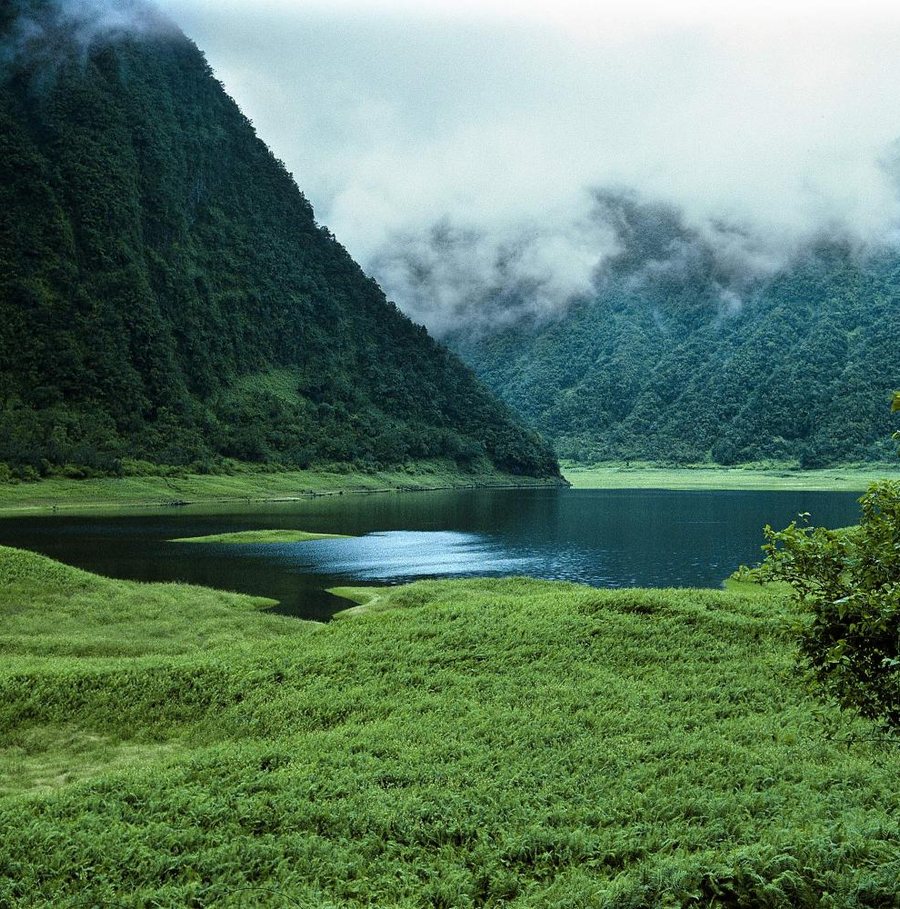
Grand Étang, before the clouds
The essentials
- From the bungalow
- 20 minutes by road
- Commune
- Saint-Benoît, Rivière des Marsouins valley
- Loop around the lake
- about 2 h, very little climbing
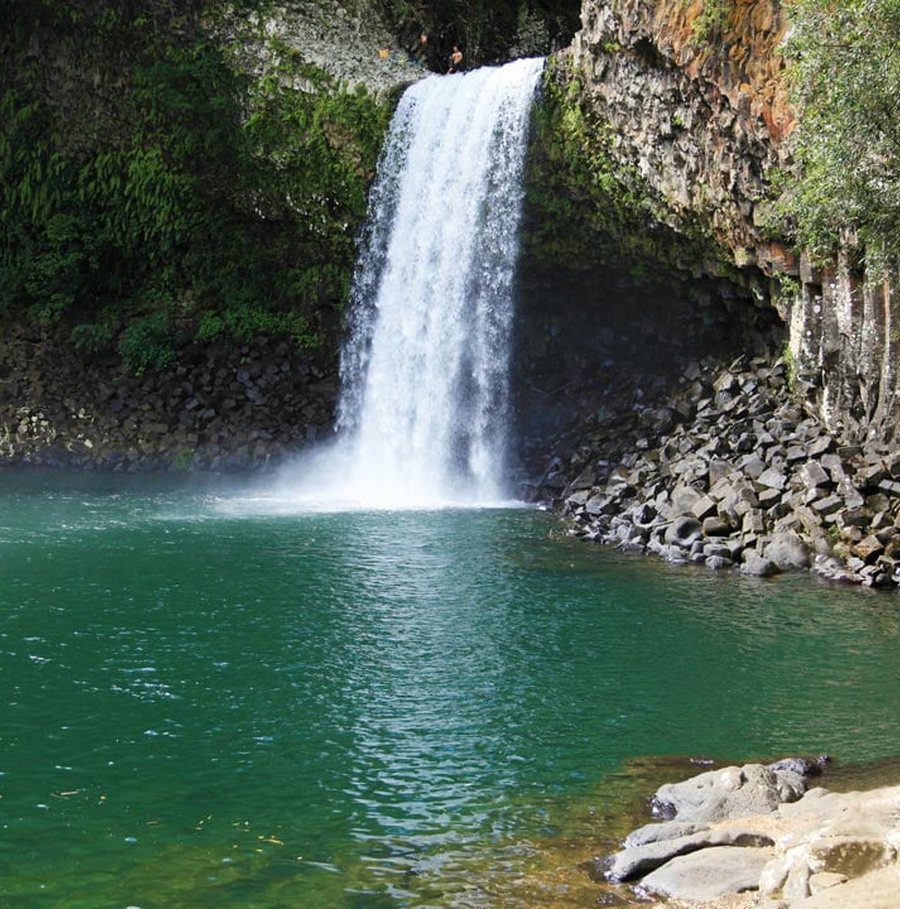
- With the Biberon waterfall
- allow 4 h in total
- Difficulty
- easy, but muddy in every season
- Best time
- before 9 am — the clouds come up after that
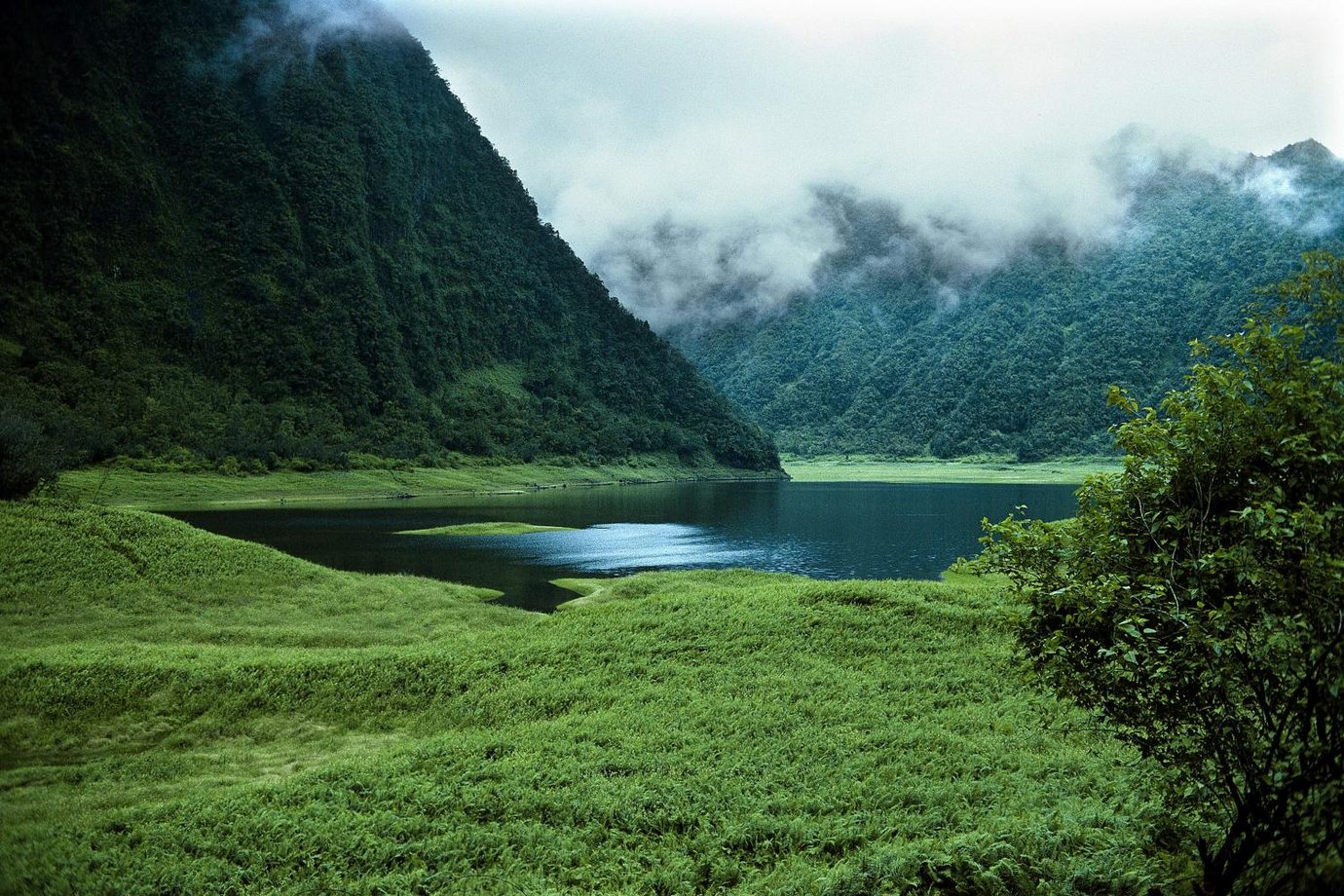
This is the walk we recommend first, and the one we do most often ourselves. Grand Étang is the largest natural lake on Réunion Island, sitting at the end of a valley closed by cliffs several hundred metres high. It is twenty minutes from the bungalow, the walking is easy, and the landscape looks nothing like what you picture of a tropical island: short grass, dark water, vertical walls and silence.
The only real constraint is the hour. The valley fills with cloud by mid-morning, and what was a lake ringed by cliffs becomes a flat grey sheet. Starting early is not a photographer's whim: it is the difference between seeing the place and walking through it.
Getting there
Take the RN3 toward La Plaine-des-Palmistes. A few kilometres past Saint-Benoît, a signposted road drops to the right toward a car park beside the Rivière des Marsouins. The road ends there; the trail starts at the car park. The last stretch is narrow and hard to pass on, so it is better not to be there when everyone else arrives.
There is no ticket office, no opening hours and no barrier. It is a free-access site, which also means there is nobody on the spot to advise you: find out what you need before you go.
The loop, and the waterfall at the far end
The way round the lake takes about two hours. The climb is negligible, but the trail is muddy nearly all year — this is the windward side of the island, and it often rains overnight even when the day is fine. Shoes you are willing to ruin will do; white trainers will not.
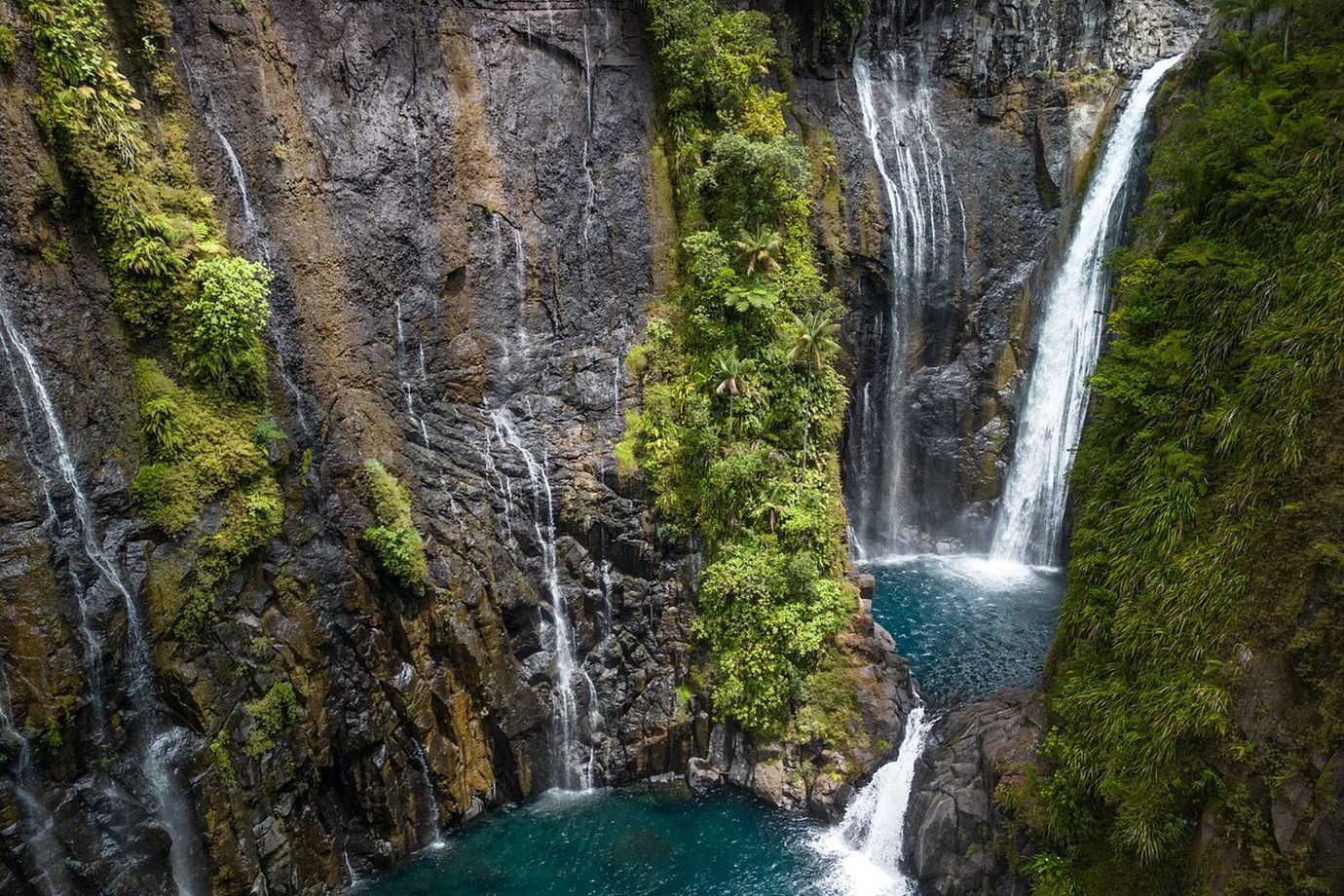
At the head of the valley, a path continues past the loop to the Biberon waterfall, a long thread of water falling from the cliff. Allow an extra hour and a half there and back from the lake. It is the finest part and the least busy, but it crosses several arms of the river: avoid it after heavy rain, when the level rises fast.
What to know before you go
- The water level varies enormously. After a wet season the lake is full; in a dry spell it can shrink to a few pools in a meadow. Both faces are worth the trip, but do not be surprised.
- You do not swim at Grand Étang: muddy bottom, cold water, and a protected natural site.
- Bring water. There is nothing on site — no kiosk, no tap.
- Mobile coverage is poor at the bottom of the valley.
- After heavy rain, check the state of the trail with the Office national des forêts before setting out.
What you see, if you look
The papangue, the island's only endemic bird of prey, often circles above the cliffs late in the morning — a brown and white bird that glides without beating its wings. In the scrub beside the path, the tec-tec, tiny and curious, will come within two metres if you stay still. Neither species exists anywhere else in the world.
If you want to make more of it
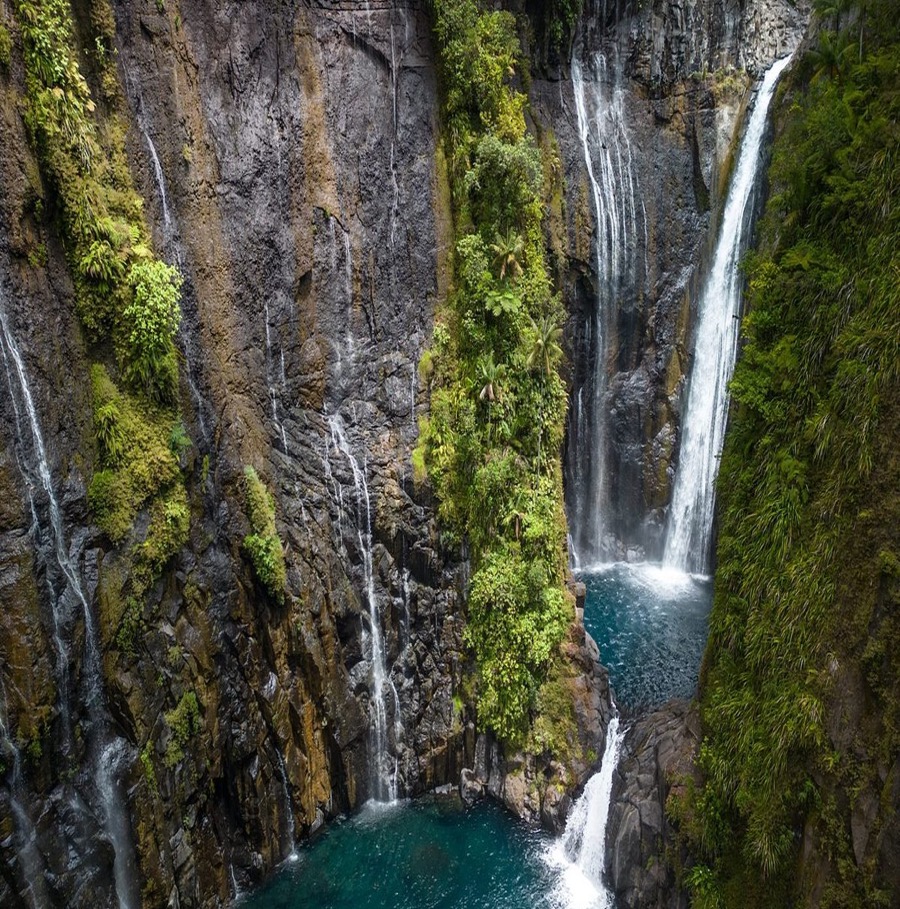
Grand Étang drains into the Rivière des Marsouins, the same valley you look down on from the Takamaka viewpoint, a quarter of an hour further by car. You get there on a road climbing above Saint-Benoît that simply stops on a cirque of waterfalls. There is no walking involved: you park, take twenty steps, and the valley opens. It is the natural companion to the morning, and both fit easily into the same outing.
How we plan the day
Leave the bungalow around 6.30 am and you are at the car park before 7. The plain loop brings you back by 9.30, the waterfall variant by 11. Either way you come down to the coast for lunch, and the afternoon stays free — which is when we often follow on to the pools at Bras-Panon, a quarter of an hour from the house.
When to come
Grand Étang can be visited all year, but not in the same state. From January to March, the wet season, the lake is full and the waterfalls run hard — the most spectacular, and also the muddiest, with a real risk of the trail being cut after a cyclone. From May to October, the austral winter, the weather is steadier and mornings are more often clear, but the lake can shrink a great deal. If you only have one morning for it, September and October offer the best compromise between visible water and a clear sky.
Frequently asked questions
How long does the Grand Étang loop take?
The loop around the lake takes about 2 hours, with very little climbing. Adding the there-and-back to the Biberon waterfall brings the total to around 4 hours.
Is the Grand Étang walk difficult?
No. The climb is negligible and the trail is wide on the loop. The only real difficulty is mud, present almost all year: bring shoes you are willing to ruin. The variant toward the Biberon waterfall crosses several arms of the river and needs more care.
Can you swim at Grand Étang?
No. The bottom is muddy, the water cold, and the site is a protected natural area. For river swimming, head for the pools at Bras-Panon, 15 minutes from the bungalow.
Is there a fee to visit Grand Étang?
No. The site is free to enter, with no ticket office and no opening hours. The car park at the trailhead is free but small, and fills up late in the morning.
Do you need a car to reach Grand Étang?
In practice, yes. The trailhead is at the end of a side road off the RN3, and no public transport serves the car park.
What time should you arrive?
Before 9 am. The valley is closed by cliffs and fills with cloud by mid-morning: arrive too late and you walk in grey without seeing either the lake or the walls.
Written in Saint-Benoît, where we rent the bungalow, and updated on September 7, 2026. Access and swimming rules change: we always point to the authority in charge rather than speaking for it.