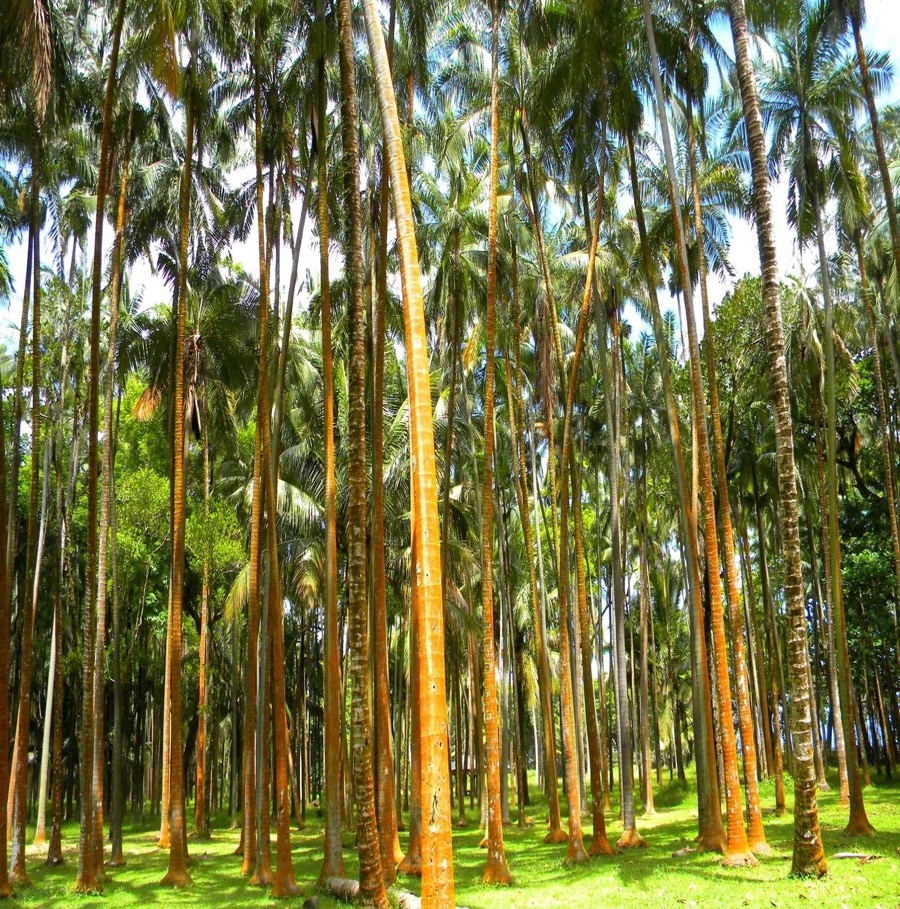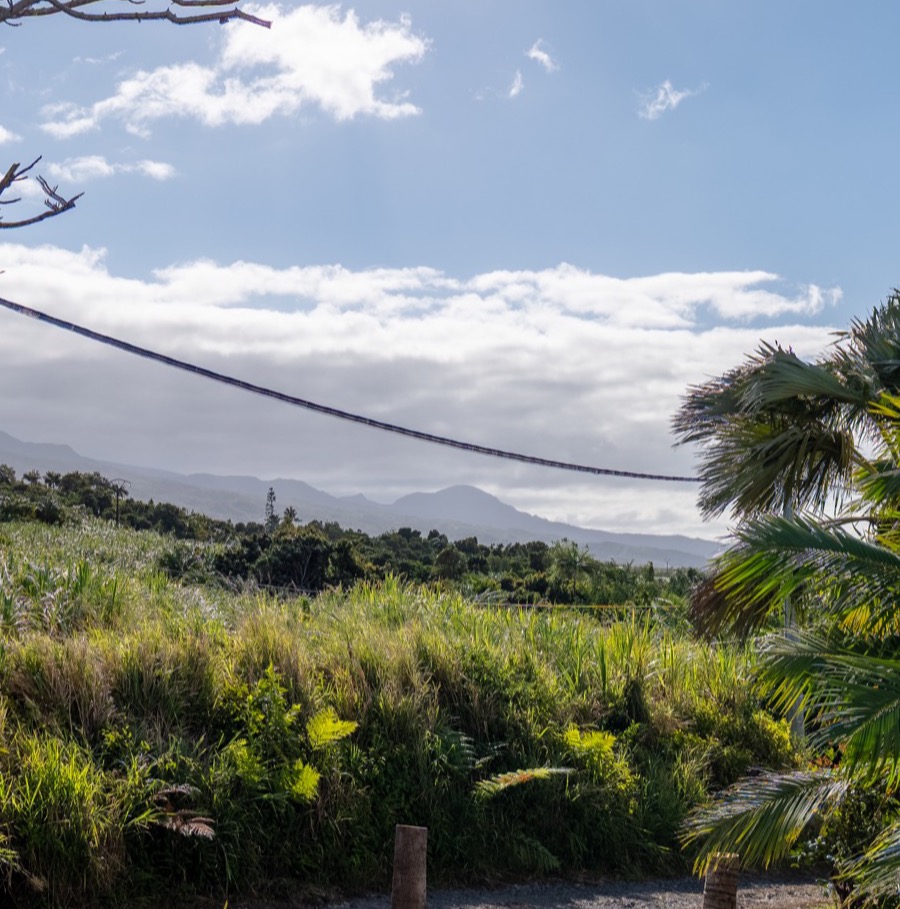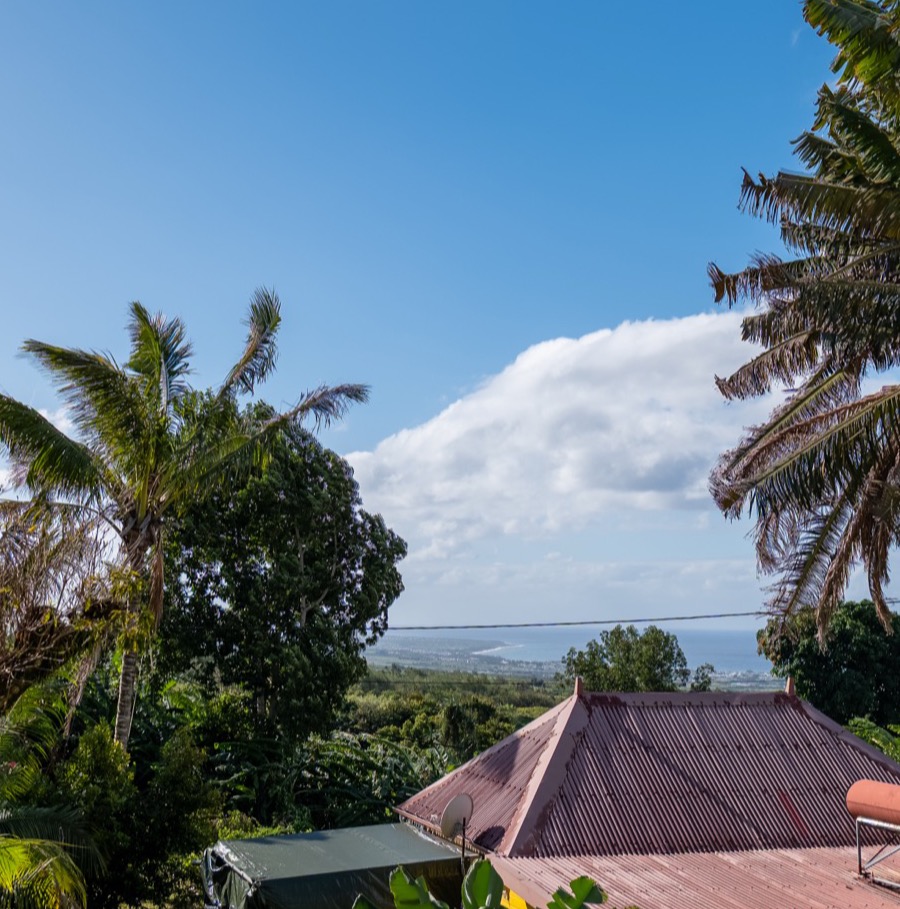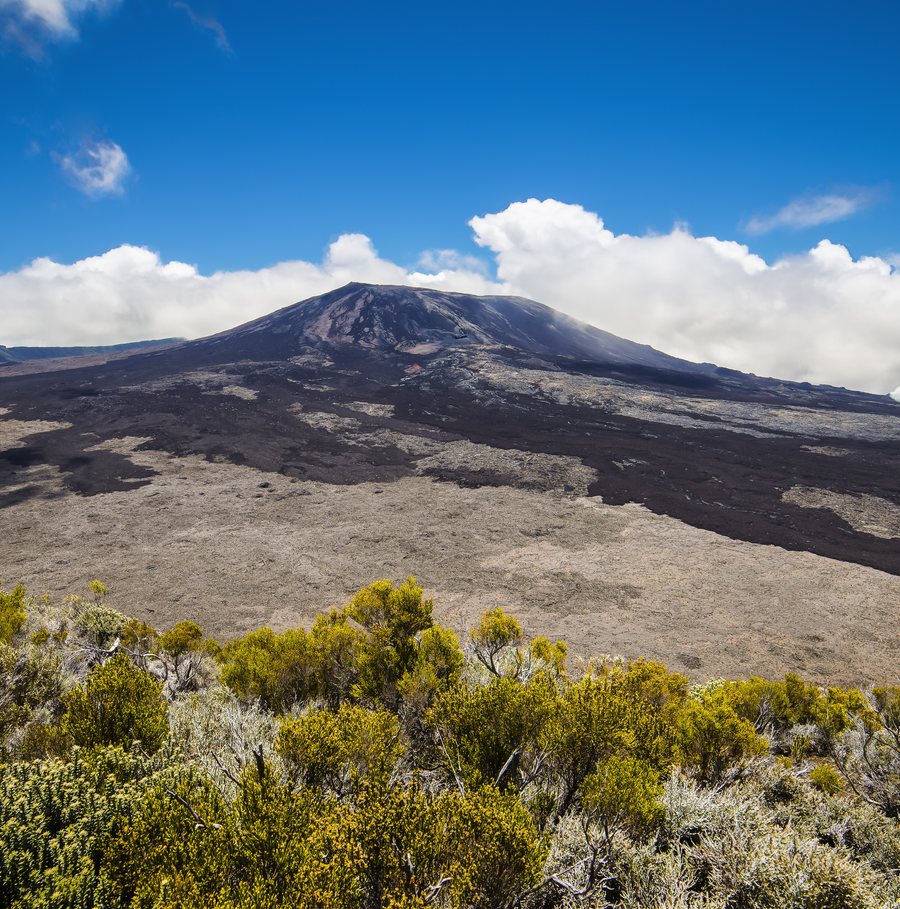
The volcano, leaving at four
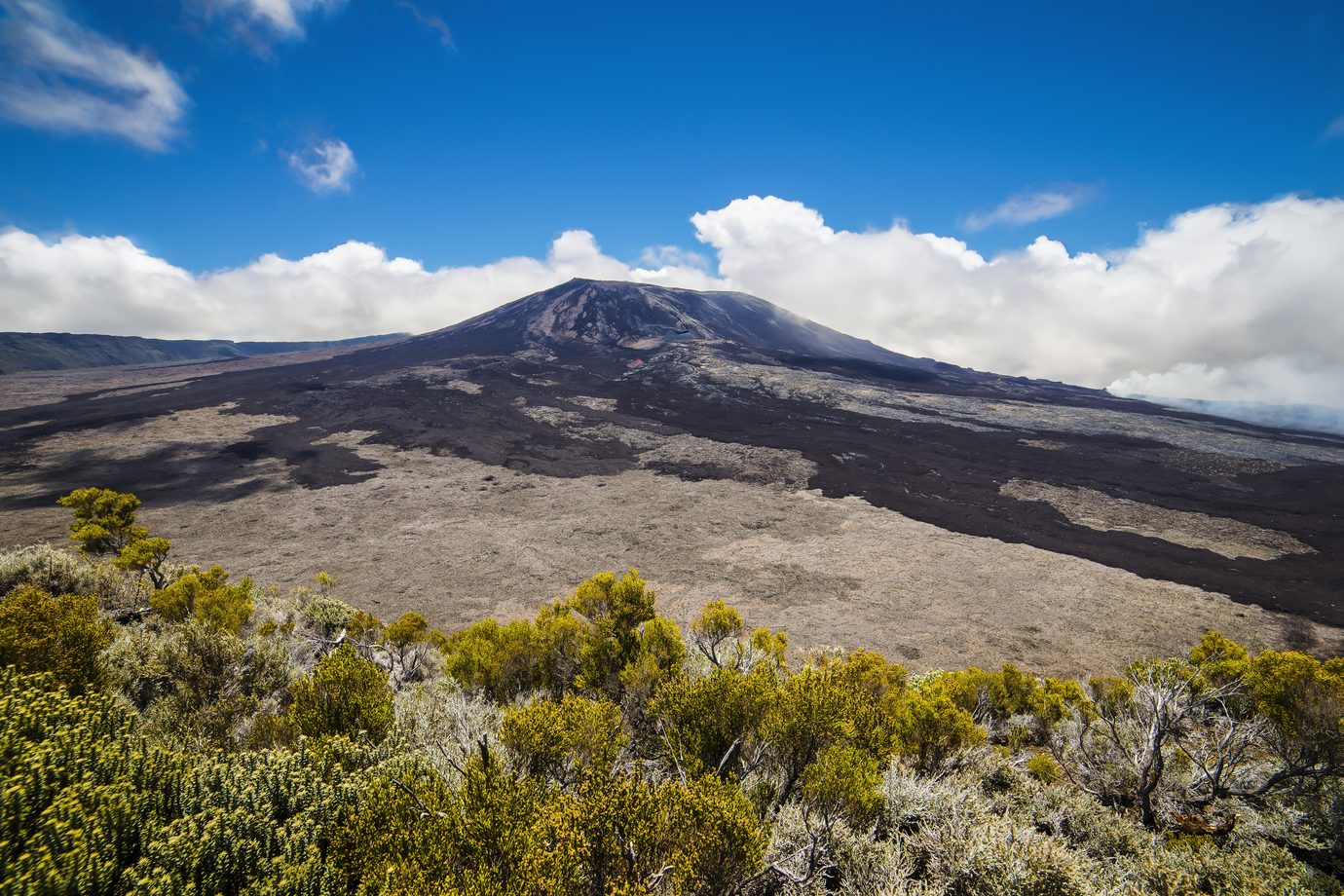
The essentials
- From the bungalow
- 1 h 50 by road
- Recommended departure
- 4 am
- Pas de Bellecombe
- 2,311 m above sea level
- Walk to the Dolomieu
- about 5 h there and back
- Difficulty
- sustained — length, altitude, no shade at all
- To check the day before
- the alert level with the prefecture
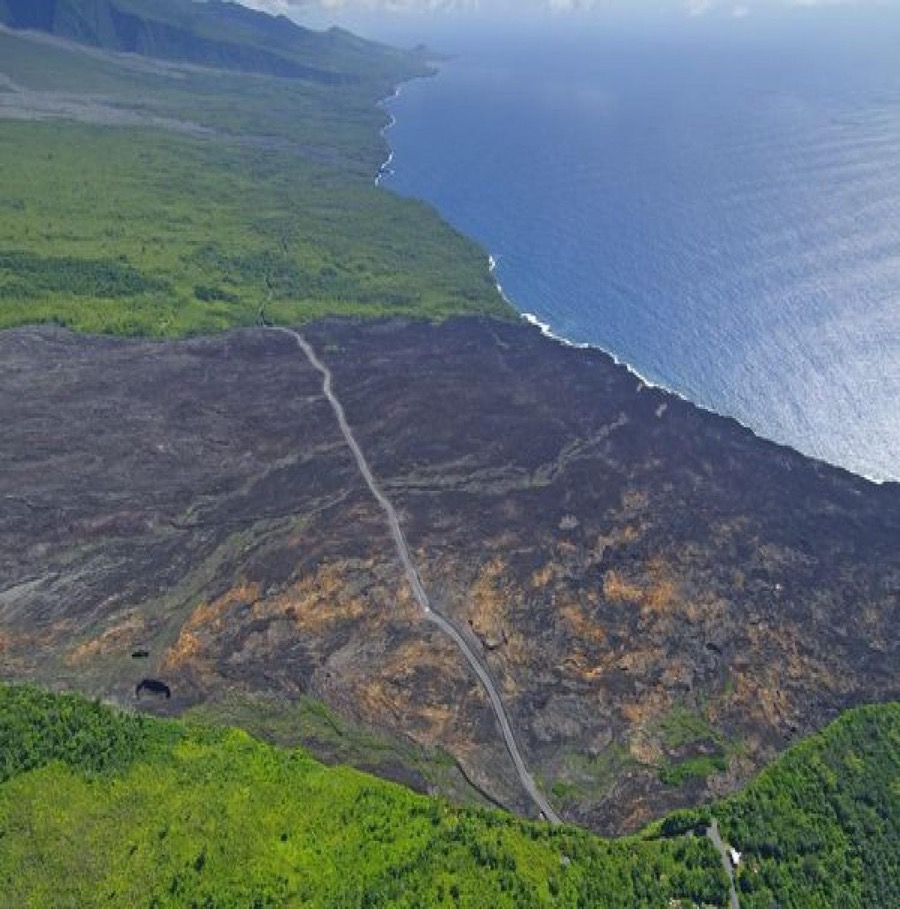
This is the one outing in this journal for which we set an alarm at half past three. It is worth it. The Piton de la Fournaise is one of the most active volcanoes in the world, and one of the few where you can walk, safely and without a guide, across the floor of the enclosure where the lava runs.
It is an hour and fifty minutes from the bungalow. That is not nothing, and it is by far the most distant thing we recommend — but it is also the only place on the island where you find yourself on a landscape that resembles nothing on earth.
Why you leave at four
Three reasons, and they add up. First the cloud: from nine or ten in the morning the cloud sea rises and drowns the enclosure. You can do the whole walk and see nothing. Then parking: the car park at the Pas de Bellecombe is limited and fills early in season. And finally the heat — there is not one metre of shade on the whole route.
Leaving the bungalow at four means reaching the belvedere around six, at first light. That is when the enclosure is clear and the low sun gives relief to the lava flows.
The road, which is already the show
You climb through La Plaine-des-Palmistes and then La Plaine-des-Cafres, before taking the Route Forestière du Volcan. The last part crosses the Plaine des Sables: an ochre expanse without vegetation, which the road enters by dropping down a cliff. Many people stop there and go no further — a pity, but you understand why.
The road is narrow, unlit, and used by cars going up fast. Drive carefully: at that hour there can be fog on the Plaines.
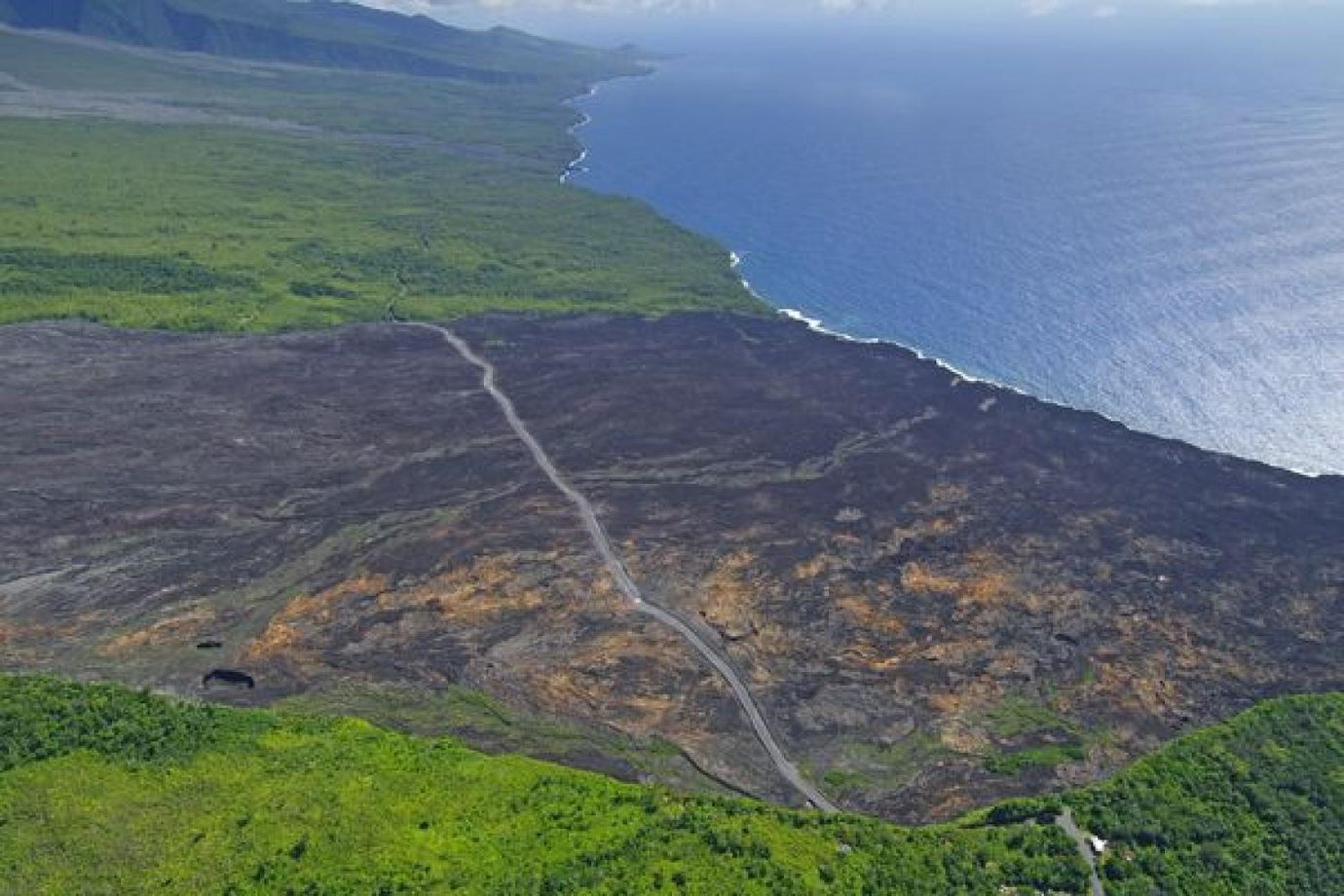
The walk, from belvedere to crater
The Pas de Bellecombe is the belvedere overlooking the Enclos Fouqué, at 2,311 metres. From there a staircase descends about a hundred and fifty metres to the floor of the enclosure. The route then crosses a lava field waymarked with dots of white paint: there is no path worn into the ground, you go from one mark to the next. Do not leave them — the lava is sharp and fog can come down in minutes.
You pass the foot of the Formica Leo, a small and perfectly conical scoria cone, then climb steadily to the rim of the Dolomieu crater. Allow about five hours there and back for the whole thing. It is long and even rather than steep, but the altitude and the absence of shade are paid for.
What can call the day off
Access to the enclosure is closed during eruptions and during alert phases. The decision belongs to the prefecture of Réunion and can come the day before. Always check the alert level before leaving — it is the one non-negotiable point of this day. The gate at the top of the staircase is physically locked when access is forbidden.
An eruption is not bad news in itself: when it is visible from authorised viewpoints, the sight at night is extraordinary. It is simply a different outing, with different rules.
What to bring
- Something warm. It can be 5 °C at first light at 2,300 m while it is 28 on the coast. A fleece and a windproof, even in the austral summer.
- Two litres of water per person. There is no water anywhere in the enclosure.
- Sun cream and a hat: at that altitude the radiation is fierce, including under cloud.
- Boots that cover the ankle. Lava wears out soles and turns ankles.
- A head torch if you set off before daylight.
- Food: there is nothing between Bourg-Murat and the belvedere.
If you do not want to walk for five hours
The Pas de Bellecombe belvedere is reached by car alone. So you can drive up, look over the enclosure from the rim, go down the staircase as far as the Formica Leo — an hour there and back — and head home. That is already a real outing, and it suits anyone travelling with children or not equipped for the full day.
Either way, plan to come down for lunch. The return to Saint-Benoît takes two hours, and you reach the bungalow with the afternoon ahead of you — just enough to do nothing, which after that particular day is exactly the programme. The next day, something gentler is in order: the pools at Bras-Panon are a quarter of an hour away.
When to come
The austral winter, May to October, gives the clearest mornings and therefore the best chance of seeing the enclosure. It is also the coldest period: frost is possible before first light at 2,300 metres. From December to March the cloud rises earlier and heavy rain regularly closes the forest road. Whatever the season, the only information that decides is the volcano's alert level: an eruption closes the enclosure overnight, in high summer as in midwinter.
Frequently asked questions
How long is the Piton de la Fournaise hike?
About 5 hours there and back from the Pas de Bellecombe to the rim of the Dolomieu crater. The route is long and even rather than steep, but it is done without shade and at altitude.
What time should you leave for the volcano?
From Saint-Benoît, leave around 4 am to reach the Pas de Bellecombe at first light, about 6. Three reasons: cloud rises and drowns the enclosure by 9 or 10, the car park fills early, and there is no shade on the route.
Can you visit the volcano during an eruption?
No. Access to the Enclos Fouqué is closed during eruptions and alert phases, by decision of the prefecture of Réunion. The gate at the top of the staircase is physically locked. Always check the alert level the day before.
Do you need a guide for the Piton de la Fournaise?
No. The route is waymarked with dots of white paint on the lava and is easy to follow in clear weather. That said, never leave the waymarking: the lava is sharp and fog can come down in minutes.
How cold is it at the volcano?
It can be 5 °C at first light at 2,300 metres while it is 28 on the coast. A fleece and a windproof are essential, even in the austral summer.
Can you go with children?
The full hike to the Dolomieu is too long for young children. But you can park at the Pas de Bellecombe, look over the enclosure from the belvedere and go down the staircase as far as the Formica Leo: about an hour there and back, and already a real outing.
Is the Piton de la Fournaise far from Saint-Benoît?
About 1 h 50 by road, through La Plaine-des-Palmistes and La Plaine-des-Cafres, then the Route Forestière du Volcan. It is the most distant place we recommend from the bungalow.
Written in Saint-Benoît, where we rent the bungalow, and updated on September 7, 2026. Access and swimming rules change: we always point to the authority in charge rather than speaking for it.